A Guide to Diamond Clarity and Diamond Grading
A Guide to Diamond Clarity and Diamond Grading
February 18, 2026
-
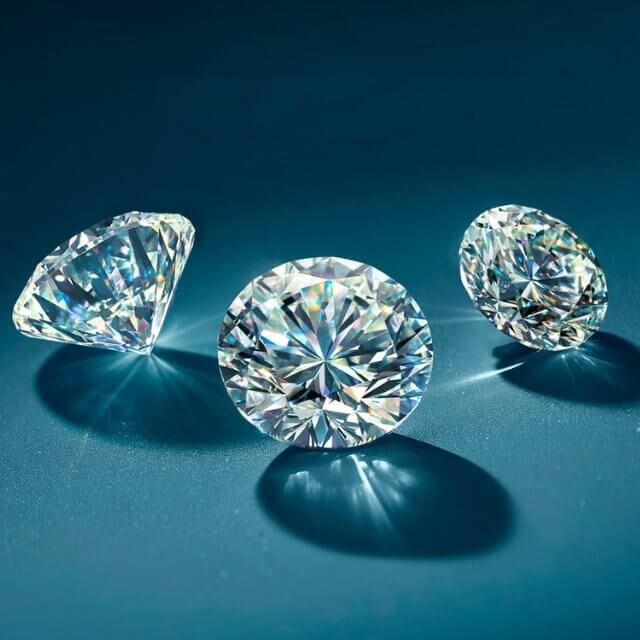
A diamond’s beauty and lustre make it nature’s finest craftsmanship. It is a symbol of legacy, unmatched opulence and refined taste.
Whether for celebration or self-indulgence, when you buy diamond jewellery, it becomes a personal treasure that reflects brilliance, purity and timeless elegance. If you plan to gift yourself or your loved ones a diamond in any form, it is necessary to know which option will stand the test of time.
For this, you must understand what diamond grading and clarity mean in the journey of a diamond masterpiece.
Understanding Diamond Clarity
Diamond stone clarity refers to the presence or absence of internal characteristics, known as inclusions, and external features, referred to as blemishes. Formed deep within the Earth, diamonds are natural wonders, and nearly all types contain tiny "birthmarks" such as minute crystals and faint lines, which are traces of their formation process.
Clarity is a measure of how pristine a diamond truly is. A diamond with fewer, smaller inclusions allows light to pass unobstructed, offering a mesmerising sparkle and brilliance.
Diamond Clarity Grades Explained
Flawless (FL) and Internally Flawless (IF) Diamonds
These diamonds are the definition of perfection. FL diamonds contain no inclusions or blemishes under 10x magnification, while IF diamonds have no internal inclusions. Their rare and unmatched purity makes them treasures of unmatched radiance.
Very Very Slightly Included (VVS1, VVS2)
VVS stones have inclusions that are so minute they are extremely difficult for a skilled grader to see, even using 10x magnification. In VVS1 stones, inclusions are marginally more difficult to spot than in VVS2. They offer outstanding brilliance and balance between diamond quality and exclusivity.
Very Slightly Included (VS1, VS2)
VS clarity diamonds contain minor inclusions that are difficult to see under 10x magnification. In the VS1 grade, the inclusions are typically invisible without a loupe, while VS2 inclusions might be marginally larger or more numerous.
Slightly Included (SI1, SI2)
SI diamonds feature inclusions that may be visible under magnification but often remain unnoticed to the naked eye, depending on placement. They are appealing because they retain their sparkle while still reflecting their natural characteristics.
Included Diamonds (I1, I2, I3)
These inclusions are clearly visible under 10x magnification and apparent to the naked eye. They may also compromise the diamond’s durability or significantly affect its brilliance. They are chosen less frequently for luxury fine jewellery but remain a part of the wider clarity spectrum.
All About Diamond Grade
A diamond clarity scale chart is just one dimension of a diamond’s character rating. The standard 4 Cs of diamond, clarity, cut, colour and carat weight, influence its overall grade, and each contributes uniquely to the diamond’s beauty.
An exceptional cut can mask minor clarity features and maximise the optical impact. The colour for diamond stones also reflects a unique characteristic. A colourless diamond is typically the most popular worldwide. Finally, carat weight measures the diamond's mass.
Grading systems used worldwide, such as the GIA scale and the AGS performance-based system, ensure that diamond classification and evaluation are conducted with precision.
A high grade on the diamond purity chart signifies a spectacular piece where every element has been masterfully achieved.
Factors that Determine Clarity Grade
Size
Larger inclusions have a greater effect on clarity by interrupting the flow of light through the diamond.
Quantity
Multiple inclusions, even of modest size, will typically reduce clarity more than a single small one.
Nature
The type or “nature” of inclusion matters; for instance, feathers, crystals or cavities each influence the grade differently.
Location
Inclusions beneath the table (at the top of the diamond) or near the edges (in the girdle) may be more visible than those hidden deep within.
Colour (Relief)
Some inclusions contrast sharply against the body of the diamond, making them more visible; others are more subtle.
How to Choose the Perfect Diamond?
Selecting the perfect diamond is all about finding a stone whose inherent beauty and character resonate with your personal style.
The 4 Cs of Diamond
A well-balanced diamond is the interplay of clarity, cut, colour and carat. A slightly lower clarity, combined with an excellent cut, can maximise sparkle, making the diamond appear more luminous than a higher-clarity but poorly cut stone.
Size and Shape
Larger stones and step cuts reveal inclusions more readily, so for such designs, clarity becomes more critical. In contrast, brilliant-cut shapes naturally conceal minor inclusions with their facets.
Eye-Clean Look
An 'eye-clean' diamond is a stone with no visible inclusions. It allows you to acquire a flawless-looking stone, offering spectacular visual appeal without requiring the premium FL or IF grades.
Inclusion Placement
If a diamond possesses a minor inclusion, its placement can often be worked into the design. If inclusions are off-centre or near the edges, they may be less visible; central inclusions may demand a more suitable setting.
Conclusion
Clarity is a measure of purity, rarity and pristine quality. Understanding the diamond stone clarity chart and how it interacts with the other Cs enables you to select the perfect diamond for your jewellery.
At Tanishq, every diamond is thoughtfully curated to reflect grace, brilliance and an enduring sense of luxury, ensuring that your chosen piece becomes a cherished part of your story.

Search with an image and find the same or similar jewellery
The file size should not exceed 6 MB
File size exceeds the limit